There were countries and religions I grew up afraid of, though I never would have used the word “afraid” at the time — I called it common sense, or just the way things were. Looking back, I can see how much of it I’d simply been told, or taught, or sold, or seen on TV, without ever examining where the fear actually came from or whether it had anything to do with the people it was supposedly warning me about. That’s the strange thing about the fear I’m talking about: it was never loud enough to notice. It didn’t feel like fear while it was operating on me, which is probably exactly why it worked as well as it did, and works so easily on the masses. I think that quiet, unexamined caution is the foundation of the culture I was raised in, a culture that’s remarkably good at advertising — at selling you a version of the world before you ever get the chance to go check it against reality yourself. Even discouraging you from ever going there.
So I let sixty years go by without touching most of that world. My wife and I went to Australia together, which felt like a reasonable enough place to start — English-speaking, familiar in most of the ways that mattered, the kind of trip where the differences you find are the interesting kind, rather than the frightening kind, unless you have a frilled-neck lizard chase you around your vehicle! Ten years after that I went back with my son, and if I’m honest, I still hadn’t traveled anywhere alone. I told myself it was about wanting to share the experience with people I loved, and that was true, but underneath it I still hadn’t figured out how to be the only familiar thing in an unfamiliar place.
Australia definitely isn’t the same as Kiribati, though it took actually going to Kiribati for me to understand how true that was. I was sixty by then, working as an Australian Volunteer on a chain of coral atolls in the middle of the Pacific — a different language (though English was the “official language”), a different rhythm to the days, a culture that owed nothing to no one, and this time nobody was coming along to translate it for me. I remember how loud that realization was in the first weeks, almost terrifying. I was the foreign one now and couldn’t hide from it. Four years there didn’t make me fearless, but it proved something to me that no amount of reading or reassurance ever could have: that I could land somewhere completely unfamiliar, on my own, and be fine. Better than fine. That’s the door Kiribati opened, and once it was open it stayed open — and is still open.
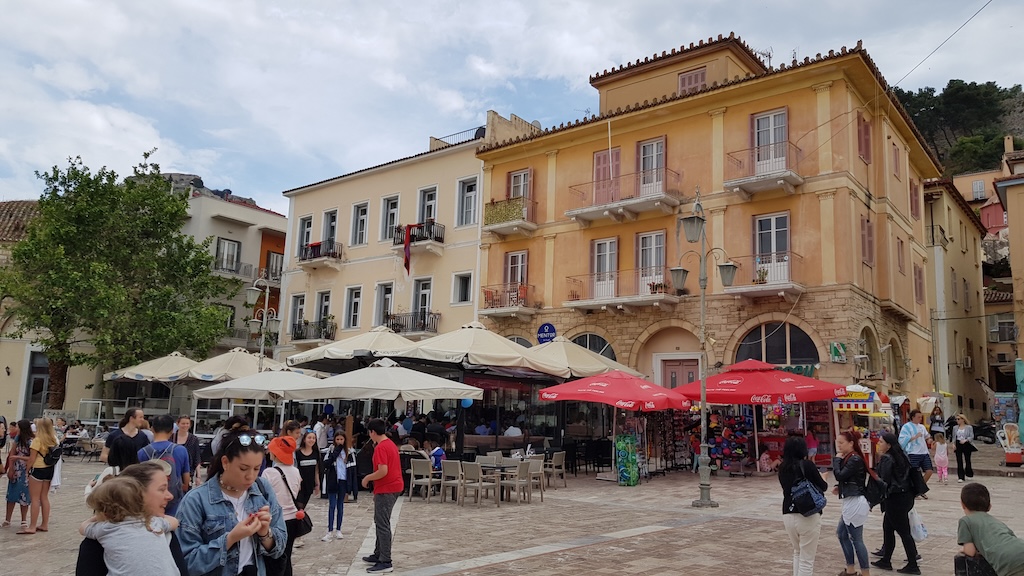
After leaving Kiribati I found myself walking through a small square in Ecuador on an entirely ordinary afternoon, and nothing much was happening, which turned out to be the whole point. Old men arguing on a bench about something that kept them laughing. Women selling fruit and vegetables from stalls set up along the footpath. Kids tearing around a fountain with the same reckless energy kids have everywhere. The church bell at the end of the square keeping its own schedule, and calling worshipers to prayer. Walking past others on the cobbled floor of the square, I realized, with something close to a jolt, that these were just people getting through their Tuesday. Not a threat or a mystery. Not the thing the news footage had trained me to brace for — just people, living exactly the way I was living. People going about their lives a few thousand miles from where I’d learned to be fearful of them. There was nobody threatening me, or trying to mug me, or wanting to throw me in jail. Just people living … peacefully.

Once I couldn’t find a good reason to have been afraid of those particular people in that particular square, I started wondering what else I’d absorbed without ever checking it — which other countries, which other belief structures I’d formed opinions about without ever sitting in the room with the people who actually held them. Fear doesn’t just keep you from going places. It writes a story about the people who live there, and you may never know it’s fiction until you show up and the actual humans don’t match it.
I think about those sixty years often. Not so much with regret, but more with animosity, and a real curiosity about what exactly I thought I was protecting myself from. I still don’t have a clean answer. I do, however, have more of these moments — other squares and other markets — other countries and places where the story I’d been handed ran straight into the person standing in front of me. Ask me about any of it. Those are stories for another time.